
Choosing a UAE free zone on cost alone is harder than it should be. Fee schedules are incomplete, "packages" bundle different things across zones, and most comparisons either go deep on one jurisdiction or stay too vague to act on. For UK founders who have already narrowed their shortlist, that ambiguity has a real price.
This post cuts through it with a structured, like-for-like comparison across three zones that represent genuinely different cost tiers: JAFZA, RAK ICC, and Ajman Free Zone. JAFZA free zone companies sit at the premium end, operating under Dubai's Unified License system within the Middle East's largest customs bonded zone, making them the benchmark against which mid-tier and budget options should be measured. RAK ICC and Ajman represent meaningfully different value propositions, not just lower price points.
Working through licence fees, visa packages, renewal costs, banking access, and the costs that appear on no official fee schedule, this comparison gives you a clear picture of which tier matches your business stage, your sector, and the specific considerations that apply when you are setting up from the UK.
Why These Three Zones Represent Three Distinct Cost Tiers
Not all UAE free zones are built the same way, and the cost differences between them reflect genuine structural distinctions rather than arbitrary pricing.
JAFZA (Jebel Ali Free Zone Authority) is DP World's flagship free zone and the largest customs-bonded zone in the Middle East, engineered for logistics, petrochemicals, and trade-heavy operations. Its cost architecture reflects that industrial DNA: mandatory physical premises, sector-specific compliance requirements, and a regulatory framework built for companies moving goods, not just invoices. For context on the infrastructure underpinning this, the zone sits adjacent to one of the world's busiest container ports, which shapes both its operational advantages and its cost baseline.
RAK ICC (Ras Al Khaimah International Corporate Centre) operates as an international business company (IBC) registry, which is a structurally different proposition. It is not a trade zone; it is a corporate registry designed for service businesses, consultancies, and holding structures. UK founders running digital or professional services businesses will find its cost model far leaner, because it eliminates the office and physical-presence obligations that make JAFZA expensive.
Ajman Free Zone occupies the budget tier, with headline licence fees below both JAFZA and RAK ICC. The lower entry cost is real, but it comes with meaningful trade-offs in banking access, visa processing, and the international credibility that matters when opening accounts or signing contracts with counterparties who scrutinise entity provenance.
The regulatory divergence compounds these differences. JAFZA operates under the Dubai Unified License (DUL) system, which introduces compliance obligations and renewal mechanics that neither RAK ICC nor Ajman replicate. That single framework difference creates downstream cost consequences that do not appear in any headline fee schedule.
UK founders shortlisting on price alone frequently mistake the licence initiation fee for the total cost of ownership. This comparison is structured to close that gap across licence fees, visa packages, annual renewals, banking setup, and the hidden compliance costs that accumulate quietly after incorporation.
The Pricing Transparency Problem UK Founders Keep Running Into
Understanding the cost structure across these three zones is only useful if you can trust the numbers you are working from. That is where most UK founders hit the first obstacle.
None of the three free zones publish fully itemised, current pricing in a format that allows direct comparison. JAFZA's cost calculator initiates a consultation process rather than returning a confirmed figure. RAK ICC and Ajman both distribute their products through licensed registered agent networks, and the price a founder sees depends entirely on which agent they approach and what margin that agent has built in. Two founders setting up identical RAK ICC structures through different agents can easily face a cost difference of AED 2,000 to 4,000 before a single variable changes.
This opacity is structural, not accidental. Quote-based pricing allows free zones and their agent networks to introduce visa package upgrades, flexi-desk add-ons, and compliance services after a headline figure has been accepted. The initial number lands, the founder commits in principle, and the scope expands.
For UK founders who want a reliable baseline before entering any agent conversation, comparing all three Dubai and UAE business setup pathways side by side is a useful starting point. Platforms like dubaiform.com aggregate verified pricing data across 50+ UAE jurisdictions, so founders can establish a like-for-like benchmark independently.
The cost ranges used throughout this comparison are drawn from verified agent data and publicly available fee schedules current as of 2026. Where ranges are wide, the section covering that zone explains the specific variables driving the spread, whether that is licence category, visa allocation, or office tier.
JAFZA Setup Costs: What UK Founders Actually Pay
With verified 2026 pricing now established, here is what JAFZA actually costs a UK founder from day one.
Licence initiation fees for a standard Free Zone Establishment (FZE) start at AED 15,000–20,000. Trading and industrial licences carry additional registration charges that push initial outlays materially higher, so the FZE floor figure is a starting point, not a typical outcome for product-based businesses.
The DUL structural cost is frequently missed. JAFZA operates under the Dubai Unified License framework, which requires DED alignment fees and can trigger dual-registration costs. This is a recurring structural obligation, not a one-off administrative charge, and it has no equivalent at RAK ICC or Ajman. Budget for it every renewal cycle.
Visa packages are priced per allocation. A 2-visa package runs AED 8,000–12,000 all-in, covering application, medical, and Emirates ID. The per-visa cost drops marginally at scale, but not dramatically. For UK founders intending to sponsor employees from year one, this line item needs to sit in the initial budget, not be treated as a future cost.
Office space is mandatory for most JAFZA licence categories. Flexi-desk packages start at AED 10,000–15,000 annually; physical office units begin considerably higher. This is JAFZA's single largest cost differential versus the other two zones in this comparison, and it is non-negotiable for the majority of business activities.
Annual renewal broadly mirrors the initial licence fee. The additional obligation is a mandatory audit for JAFZA Free Zone Companies, costing AED 3,000–8,000 per year from an approved firm. RAK ICC and Ajman do not impose this for most structures, so the audit line compounds JAFZA's cost advantage on a three-year total ownership basis.
Banking is where JAFZA earns its premium. As a Tier 1 zone with DP World backing, JAFZA entities are actively onboarded by Emirates NBD, Mashreq, and ADCB. Account opening averages 4–6 weeks, compared to 8–16 weeks for lower-tier zones. For businesses where delayed banking is a genuine revenue risk, that timeline difference has real commercial value.
First-year total for a UK founder setting up a JAFZA FZE with a flexi-desk and 2-visa package: AED 45,000–65,000, approximately GBP 9,500–13,500 at 2026 exchange rates. Banking fees, audit costs, and compliance obligations sit on top of this figure. Founders who want a full step-by-step breakdown of what follows incorporation should consult the UAE business setup guide covering every stage from activity selection to bank account opening.
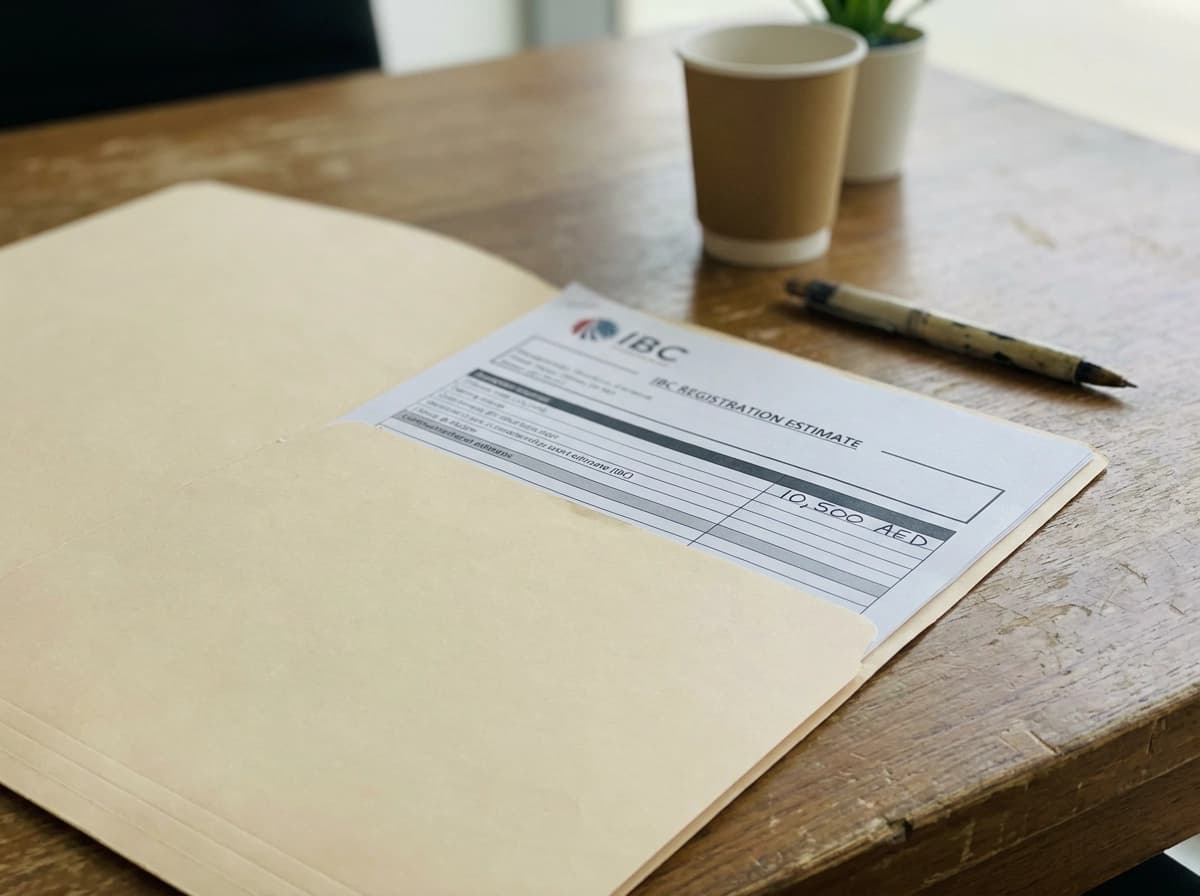
RAK ICC Setup Costs: The Mid-Tier Case for Service Businesses
Where JAFZA's cost structure reflects its industrial scale, RAK ICC is built for a different founder profile entirely.
RAK ICC IBC incorporation fees start from approximately AED 8,000–12,000 when agent fees are included alongside the base registration cost, placing it materially below JAFZA's entry point. That gap alone explains why RAK ICC consistently tops the cost-first shortlist for UK service founders evaluating UAE jurisdictions.
The more significant saving is on office space. RAK ICC IBC structures carry no physical office requirement, which means the AED 10,000–15,000 annual flexi-desk cost that JAFZA mandates simply does not apply. For a UK-based consultancy or digital business with no UAE headcount, this is the single largest structural cost difference between the two zones.
Visa sponsorship is where founders most commonly miscalculate. RAK ICC IBCs cannot sponsor UAE residence visas directly. Founders who need a UAE investor visa must obtain it through a linked free zone entity or via the RAK Free Trade Zone (RAK FTZ), which is a separate entity from RAK ICC. That routing adds AED 5,000–8,000 in setup costs and administrative steps that do not appear in any RAK ICC fee schedule. Budget for it upfront or the first-year cost figure will be wrong.
Annual renewal costs sit at approximately AED 6,000–9,000 for an IBC, and there is no mandatory audit requirement for most structures. Over a three-year horizon, the absence of audit fees alone saves AED 9,000–24,000 compared with JAFZA, where audits are unavoidable. The year-two-onward cost advantage is one of RAK ICC's most underappreciated attributes.
Banking is the counterweight. UAE banks classify RAK ICC IBCs as offshore structures, and major banks frequently decline or delay account opening as a result. Founders should budget AED 2,000–5,000 for a bank introduction service and treat 8–16 weeks as a realistic timeline, not a worst case. This is the most commonly cited friction point among UK founders who have gone through the process.
For context on how RAK ICC compares within the broader northern emirates landscape, the Dubai vs Ras Al Khaimah business setup comparison for 2026 covers jurisdiction-level differences in more detail.
Total first-year cost for a RAK ICC IBC with no office and no visas runs AED 10,000–15,000, roughly GBP 2,100–3,200 at 2026 exchange rates. Layer in banking facilitation and visa routing and that figure climbs considerably. RAK ICC is the right structure for UK founders running consulting, fintech, or IP-holding operations who need no UAE physical presence, no local employee visas, and can accommodate a slower banking timeline.

Ajman Free Zone Setup Costs: Budget Entry With Known Trade-Offs
Where RAK ICC trades office costs for banking patience, Ajman Free Zone trades both against a lower headline price across every line item.
Licence fees at Ajman start from AED 5,750 to 8,000 for trading and service licences, making them 60 to 70% cheaper than a comparable JAFZA entry and 30 to 40% cheaper than RAK ICC at initiation. That gap is real and material for a founder working with limited capital.
Flexi-desk packages begin at approximately AED 5,000 to 7,500 annually. Cheaper than JAFZA's mandatory AED 10,000 to 15,000 outlay, but unlike RAK ICC's IBC structure, a physical workspace cost still applies. Founders cannot eliminate it.
Visa access is one of Ajman's genuine strengths. Entry-level packages typically permit three to six visas, which is practical for UK founders who want to sponsor a small team immediately without paying JAFZA's per-visa premium or navigating RAK ICC's indirect visa routing. For a lean operation of two or three people, Ajman's visa quota structure works from day one.
Annual renewal runs AED 5,000 to 7,500, the lowest of the three zones. However, founders consistently report slower processing times and less mature digital infrastructure than either JAFZA or RAK ICC. Renewals that take days elsewhere can stretch to weeks at Ajman, which carries an operational cost that does not appear in the fee schedule.
Banking is where Ajman's cost advantage erodes most severely. Major UAE banks routinely flag Ajman Free Zone entities for enhanced due diligence, and account rejection rates are materially higher than for JAFZA or RAK ICC entities. Founders should budget for a three to six month account-opening process and treat it as a potential project blocker, not a formality. The all-in first-year cost for a UK founder with a licence, flexi-desk, and two visas sits at AED 22,000 to 32,000 (approximately GBP 4,600 to 6,700), the lowest of the three zones. That figure does not include the time cost or facilitation fees that banking friction generates.
Full Ajman fee structures and activity-level pricing are available via the Ajman Free Zone jurisdiction guide on dubaiform.com, which reflects current 2026 schedules.
Ajman suits pre-revenue or early-stage UK founders testing the UAE market on minimal capital. The model works if banking timelines are planned for in advance and the business does not depend on a live UAE account in the first months of operation.
Side-by-Side Cost Comparison: JAFZA vs RAK ICC vs Ajman
With each zone's individual costs established, the numbers below put all three on a single grid.
Ajman wins on sticker price, but sticker price is the wrong metric once office and visa costs are added. RAK ICC's zero office requirement for IBC structures is a genuine structural saving, not a rounding difference; it eliminates AED 10,000–15,000 annually that JAFZA treats as non-negotiable for most licence categories.
On visas, JAFZA's direct sponsorship is administratively cleaner. RAK ICC routes residence visas through RAK FTZ, which founders consistently underestimate at the budgeting stage. If you are planning this route, the step-by-step Ras Al Khaimah business setup guide covers the RAK FTZ structure and costs in detail.
The renewal row is where JAFZA's cost of ownership compounds most visibly. A mandatory audit adds AED 3,000–8,000 every year; over three years, that alone accounts for a significant portion of the TCO gap versus RAK ICC.
Banking timelines do not appear in any fee schedule, but 12–24 weeks of delayed account activation is a real operational cost for any business waiting to invoice clients. JAFZA's approval rate advantage is worth pricing into the comparison, particularly for founders who need accounts open within 60 days of incorporation.
For service businesses with no physical UAE presence requirement, RAK ICC's three-year TCO is roughly one-third of JAFZA's, and less than two-thirds of Ajman's once banking friction is factored in.
UK-Specific Considerations That Change the Cost Calculation
Those fee-table comparisons tell the cost story in AED. For UK founders, a second calculation runs in parallel, and it shifts the rankings.
The UK-UAE Double Taxation Agreement matters, but only if your entity has substance. The 2016 UK-UAE DTA can protect UAE income from UK tax, but treaty benefits depend on whether HMRC regards the UAE entity as genuinely resident and active there. A JAFZA entity with a physical office and payroll has a credible substance argument. A RAK ICC IBC with no office, no staff, and no UAE footprint is harder to defend. Founders assuming the DTA automatically applies to a RAK ICC structure should take UK tax advice before incorporating, not after.
HMRC's Controlled Foreign Company rules compound this point. UK founders remaining UK tax resident are subject to CFC legislation. Exemptions require demonstrable substance in the foreign jurisdiction. JAFZA's real-office requirement is a compliance asset; RAK ICC's zero-office model is a liability under HMRC scrutiny. This cost differential appears nowhere in any free zone fee schedule.
UK passport holders pay the same visa fees as other nationalities across all three zones. The procedural difference: JAFZA processes investor visas directly, while RAK ICC and Ajman structures may require additional coordination with the General Directorate of Residency, adding time rather than fees.
UAE branches of existing UK limited companies face a separate cost layer. All three zones charge branch registration fees of approximately AED 10,000 to 20,000 on top of standard licence costs. UK company documents must be notarised and apostilled before submission, adding roughly GBP 300 to 600 in UK-side preparation. For a full walkthrough of entity structures available to UK founders, see Firm Registration in the UAE: A Complete Guide for 2026.
Banking compliance for UK-connected entities has tightened since 2023. UAE banks now routinely request proof of UK tax compliance, a letter from a UK accountant, and sometimes a UK bank reference. This applies across all three zones, but JAFZA's Tier 1 status means banks are more willing to work through the documentation process rather than decline outright.
Hidden Costs That Do Not Appear in Any Free Zone Fee Schedule
Beyond the UK-specific compliance layer sits a separate category of costs that never appear in any zone's published fee schedule, yet collectively add thousands of pounds to your first-year outlay.
Audit fees create the sharpest divergence. JAFZA mandates an annual audit for FZE and FZCO structures, and an approved auditor will charge AED 3,000–8,000 for a small company with straightforward accounts. RAK ICC and Ajman do not impose this requirement for most structures. Over three years, that exemption saves AED 9,000–24,000, a figure that materially narrows RAK ICC's licence-fee gap with JAFZA when viewed in reverse.
Banking minimum deposits are the most misunderstood hidden cost. UAE banks advertise zero account-opening fees, but most require a minimum deposit of AED 10,000–50,000 depending on account type, with monthly charges if the balance falls below that threshold. For an early-stage UK founder, that capital is locked rather than deployed.
Registered agent fees apply exclusively to RAK ICC IBC structures. A licensed registered agent is a regulatory requirement, typically costing AED 2,000–4,000 annually. JAFZA and Ajman have no equivalent mandatory line item. Factor this into any like-for-like RAK ICC comparison.
Document attestation is a UK-specific cost that catches founders off-guard. Apostilling and attesting personal documents through the UAE Embassy in London costs GBP 50–120 per document. A standard application requires three to five documents, so budget GBP 150–600 before a single UAE fee is paid. For a full walkthrough of what that process involves, the Company Registration in the UAE: The Complete Guide covers document requirements across all three zones in detail.
UBO registration is mandatory for all UAE free zone entities. Most agent packages include it, but founders filing independently should allow AED 500–1,500 in admin fees, recurring annually.
Activity amendment fees apply across all three zones when you add a business activity or upgrade a licence category mid-year. Expect AED 1,000–5,000; JAFZA sits at the higher end owing to its DUL framework requirements.
Which Zone Fits Which UK Founder Profile
Those hidden costs clarify the real price gap between zones. The next question is which gap is worth paying, and that depends entirely on your business stage.
Pre-revenue, service business, under £10,000 to deploy: Ajman Free Zone is the rational starting point. Licence and flexi-desk costs fit inside that capital constraint; the trade-off is banking, which will take three to six months. Treat that waiting period as time to build a UAE banking track record rather than a blocker, and plan your cash flow around UK accounts until the UAE account is active.
Early-stage consulting or digital business, no UAE physical presence needed: RAK ICC IBC is the strongest value position. No office cost, no mandatory audit, and the lowest three-year TCO of the three zones. Credibility with B2B clients is sufficient provided you select a reputable registered agent; a cut-price agent with weak compliance processes undermines that credibility entirely.
Established UK SME in trading or import/export, needing fast banking and employee visas: JAFZA is correct despite the cost premium. The four-to-six-week banking timeline, direct visa sponsorship, and DP World logistics infrastructure convert what looks like an expensive licence into genuine operational efficiency. For businesses where delayed banking or customs friction directly costs revenue, the premium pays for itself.
Holding structure for international investments or IP licensing: RAK ICC IBC again, but structured carefully. The UK-UAE Double Taxation Agreement can work in your favour, though the position requires specialist advice before you incorporate. Budget £2,000 to £5,000 for combined UK and UAE tax structuring; skipping that step creates compliance risk that costs more to unwind later.
UK founder with existing JAFZA clients or supply chain: Co-location in the same zone simplifies customs clearance, warehousing coordination, and commercial relationships in ways that do not show up in any fee schedule. The cost premium is real; so is the friction you avoid by being inside the same ecosystem as your key partners.
For any of these profiles, using a platform that provides verified, current pricing across all three zones before you engage an agent removes the margin distortion that single-agent quotes routinely introduce.
What the Setup Process Actually Looks Like Across All Three Zones
Once you have matched your zone to your founder profile, the next question is practical: how long does this actually take, and what does the process demand of a UK-based founder?
JAFZA runs 2-4 weeks from document submission to licence issue, assuming your business activity is pre-approved and your documents are correctly apostilled. The DUL framework introduces a DED registration step that neither RAK ICC nor Ajman requires, which adds processing time and a coordination layer that is genuinely absent from the other two processes.
RAK ICC is the fastest of the three. An IBC can be formed in 3-7 working days through a licensed registered agent. For a clean service or holding structure, incorporation is not where founders lose time; banking is. Expect the process clock to restart the moment you move from licence to account opening.
Ajman Free Zone typically takes 1-2 weeks and can be initiated entirely remotely, which is also true of RAK ICC. JAFZA differs: certain licence categories require an in-person visit, meaning UK founders should factor in a return flight and accommodation, realistically £300-600 at current rates, before the first document is filed.
All three zones accept digital submissions for initial applications. Final licence issuance, however, requires original or certified copies, and if you are managing this independently from the UK, international courier costs of £30-80 are an unavoidable line item.
Using a formation platform such as dubaiform.com for UAE free zone business setup consolidates document tracking, registered agent coordination, and pricing verification into a single workflow. This matters because fragmented agent coordination is where costs quietly inflate, particularly across zones where pricing is not published transparently.
The Cost Tier That Fits Your Stage
With the setup process clear, the final question is simpler: which tier actually fits where you are right now?
JAFZA is the premium tier. Higher licence fees, mandatory annual audit, and compulsory office space push first-year costs to approximately GBP 9,500–13,500. For UK founders in trade, logistics, or petrochemicals, that premium buys the UAE's strongest corporate banking approval rates, direct visa sponsorship, and DP World's logistics infrastructure. The cost is justified when operational friction carries a direct revenue cost.
RAK ICC is the value tier for service businesses. At roughly GBP 2,100–3,200 for a first-year IBC with no office and no visas, it carries the lowest three-year total cost of ownership of the three zones by a material margin. The trade-off is banking: RAK ICC entities are treated as offshore structures by major UAE banks, and account opening routinely takes 8–16 weeks. The right registered agent matters significantly here.
Ajman is the entry tier. Headline costs are the lowest of the three, and visa quotas are accessible even on entry packages. The structural risk is banking; account opening rejections are common, and founders should treat the process as taking three to six months minimum. This tier suits pre-revenue founders testing the UAE market on limited capital, not businesses that need fast account activation.
One caveat applies across all three: UK tax considerations change the picture. HMRC's Controlled Foreign Company rules require genuine substance for exemption, and RAK ICC's zero-office structure is harder to defend under those tests than a JAFZA entity with real staff and premises. Service founders should validate their UK-side tax position with a specialist before assuming RAK ICC is the cheaper option overall.
Before committing to any zone, use a verified comparison tool to check actual 2026 fee schedules across all three. A single agent quote reflects that agent's margin, not the market rate.
Conclusion
Three zones, three distinct cost tiers, and no single right answer. JAFZA suits established businesses that need credibility and banking speed. RAK ICC delivers the lowest three-year cost of ownership for service founders who can absorb a slower banking timeline. Ajman offers genuine entry-level access for pre-revenue founders willing to accept structural trade-offs.
The number that matters is not the headline setup fee. It is the total three-year cost, adjusted for your UK tax position, banking timeline, and the revenue cost of operational friction.
Before you commit, verify 2026 fee schedules independently, get your UK-side CFC position confirmed by a specialist, and compare at least three agent quotes for the zone you are targeting.
The right structure built on accurate numbers is the foundation every scalable business needs. Start with the facts, not the brochure.